James Bond
You Only Live TwiceJames Bond’s Japanese mission turns a career crisis into a collision between public duty and private vengeance. Sent to confront a nuclear threat and then to penetrate the Castle of Death, he discovers that its supposed Swiss doctor is the man who murdered his wife, Tracy. Bond destroys that enemy, but his escape ends not in restored triumph but in injury, rescue, and a life he can no longer remember.
Identity and a Career Crisis
At the opening of this arc, Bond is still capable of swagger and performance. In a private gathering with geisha, he protests that Trembling Leaf’s first kiss was not the promised one, then accepts the fuller kiss that follows. The scene presents him as a foreigner playing at ease with Japanese customs: he jokes about sake and claims Western instinct is superior, while Tiger Tanaka answers that Bond’s knowledge of porcelain is meagre and warns him not to underestimate the drink. Tiger’s teasing also makes Bond’s conspicuous drinking a social performance, one that wins him face but does not make him an accomplished companion.
That confident persona is under pressure in London. Bond believes his recent assignments have gone badly and, when M. tells him he is being removed from the Double-O Section, offers his resignation rather than accept staff work. M. reacts with unusual anger, striking his desk and revealing that the apparent demotion is a cover for promotion. Bond is to become an acting member of the Diplomatic Section, receive a four-figure number and a thousand pounds more a year, and retain his office and secretary. M. wants the change kept quiet. Bond’s relief and excitement reverse his expectation: the man who thinks he has become useless is being entrusted with the most important job of his career.
Intelligence and the Test in Japan
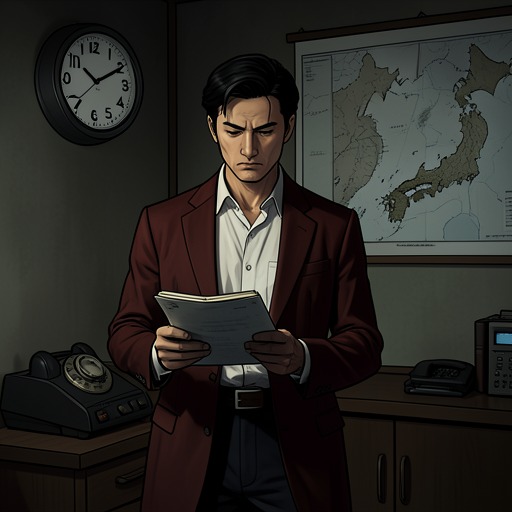
Bond is shown a coded Soviet message that he reads in English. It says the Soviet Union possesses a 200-megaton weapon and plans a high-altitude test over Novaya Zemlya on September 20, following a speech by Number One on September 1. The message anticipates fallout and public protest, and describes Moscow’s plan to use the weapon as leverage against Britain. It claims that a missile striking London would destroy life and property south of a line between Newcastle and Carlisle, while a second near Aberdeen would destroy Britain and Ireland. The intended diplomatic pressure is to remove American bases and offensive weapons from Britain and bring about British nuclear disarmament, putting the Anglo-American alliance at risk. The document makes Bond’s mission a matter of national survival rather than routine intelligence work.
In Japan, Tiger Tanaka tests whether Bond is worthy of access to sensitive material. Tiger explains that his Prime Minister agreed to the request only if Bond proved himself; success would demonstrate that Britain still possessed an elite capable of safeguarding the information. Tiger then states the test in stark, folkloric terms: “You are to enter this Castle of Death and slay the Dragon within.” Bond initially dismisses the challenge as samurai nonsense, but the assignment requires him to join Tiger’s intelligence operation and confront a danger that is at once political and personal.
Bond also shows his suspicion in the practical details of the journey. Leaving Fukuoka with a police escort, he recognizes the man who stole his wallet riding a motorcycle about a mile behind them. He insists that Tiger act on his observation. Tiger orders the driver onto a side track and then back onto the road in pursuit, directing him to warn the rider and, if he does not stop, force him into the ditch. The excerpt establishes Bond’s alertness and Tiger’s willingness to turn his suspicions into action, without recording the pursuit’s outcome.
Blofeld Revealed
A photograph of an armoured figure in a jagged, winged helmet gives Bond a chance to assess the apparent opponent’s vulnerable points: the neck and joints, partly protected by a metal shield and armed with a broad samurai sword. But it is the passport photograph of Dr Guntram Shatterhand that changes the meaning of the mission. Bond recognizes the man beneath his altered appearance: the drooping black moustache, repaired nose, and gold-capped tooth. He asks for a photograph of the woman as well, and recognizes Irma Bunt by her face. His controlled reaction gives way to venom because Shatterhand is actually Ernst Stavro Blofeld, the man who murdered Tracy, Bond’s wife for less than a day, nine months earlier.
As he prepares, Bond understands the scale and purpose of Blofeld’s deception. In his assessment, the wealthy botanist’s gifts of rare plants and support for expeditions helped build a cover for a planned retirement devoted to gardening. The garden, however, is a trap for people who want to die: a place that turns the demand for death into Blofeld’s murderous spectacle. Bond sees Japan’s high suicide statistics and appetite for the bizarre as conditions Blofeld has exploited, and recognizes that the Black Dragon Society helped make the operation possible. His objective is no longer only professional. He describes the confrontation to himself as a blood feud, and goes forward with ninja equipment, a two-inch pocket knife, and a thin steel chain, relying on surprise rather than superior weapons.
Capture, Combat, and Escape
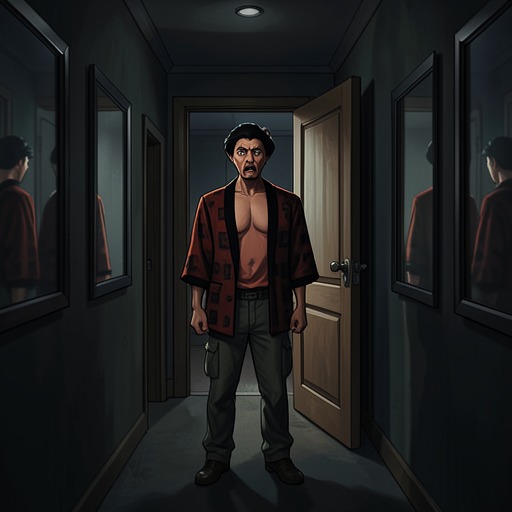
Bond’s disguise and composure are tested after he falls into the oubliette. Confused by the blows to his head, he mistakes straw in his hands for the two awabis he believes Kissy could expect him to bring back. Then recognition returns: he remembers that he must act as a deaf-and-dumb Japanese miner from Fukuoka. Naked except for black cotton ninja underpants, he bows, keeps his expression blank, and follows the guards rather than reveal himself. In a small library, he sees Blofeld in a black silk kimono embroidered with a golden dragon, with Irma Bunt beside him; his equipment and the incriminating contents of his pockets have been laid out for inspection.
The confrontation becomes a desperate physical struggle. Bond strikes Blofeld’s legs with a stave and later hits his shoulder, but Blofeld’s sword cuts the weapon down and drives Bond back. When the sword-point brushes Bond’s stomach, he uses the wall to rebound into a counterattack, drops his own weapon, and seizes Blofeld by the neck. Blofeld’s sword clanks to the floor as Bond keeps his grip through the attempts to claw at his face. Bond whispers, “Die, Blofeld! Die!” and continues strangling him until Blofeld’s eyes roll upwards and his body goes limp. Even after the killing, Bond remains in the grip of blood lust before slowly regaining control.
He then remembers the second task he had planned. With Blofeld’s sword, he hacks open the wooden box in the torture room and turns the large wheel inside until it is closed. Guards block his route, so he smashes a window and climbs onto the terrace. With no clothes available, he tears the kimono from Blofeld’s body and puts it on. Irma Bunt is still breathing heavily in a drunken sleep. Bond escapes through the broken window, but the flight leaves him exposed to another fall and another crisis.
Rescue and the Loss of Memory
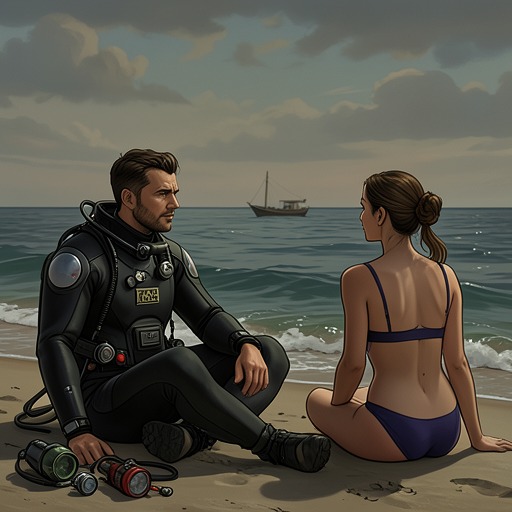
Kissy Suzuki sees a black-winged figure in the kimono fall into the sea and swims the two hundred yards from the wall to reach him. The impact has knocked the wind from Bond, but the sea revives his will to live. As he struggles to free himself from the kimono, he mistakes Kissy for Blofeld and tries to strike her. She identifies herself, but the escape has not returned him to an intact sense of self. Later, on Kuro, Bond finds a square of newspaper taken from the lavatory spike and asks what the word “Vladivostok” means. He connects it with Russia and says he feels that much of his earlier life involved that country. Kissy confirms his guess, remembering her promise to the priest. Bond asks her to help him discover who he was before arriving on Kuro. The question marks the cost of survival: Blofeld is dead, but Bond’s past remains inaccessible, and Kissy must decide how to answer a man who cannot remember it.